Low- and middle-income countries (LMICs) are struggling from the aftereffects of a global pandemic, rising debt, and stagnating growth—and are now facing a further financing crisis as major donors slash their aid budgets. Against this backdrop, domestic resource mobilisation is crucial if governments are to deliver on their priorities. Health taxes are an ideal policy option to raise revenue and improve public health: if all low- and middle-income countries increased taxes enough to raise prices of tobacco, alcohol, and sugar-sweetened beverages by 50 percent, they could raise $2.1 trillion over the next five years—equivalent to 180 percent of total Official Development Assistance. However, despite this potential, health taxes remain underutilised.
Following the Fourth International Conference on Financing for Development (FfD), where countries agreed to consider “introducing or increasing taxes on tobacco, and alcohol, as a non-distortionary tax source with a clear potential to increase domestic revenue,” this event will discuss how health taxes can serve as a viable solution to the current financing shortfall. The event will also delve into the new “Accelerating Health Taxes: The 3 by 35 Initiative,” launched at FfD as a collaboration between the World Health Organization and partners from other multilaterals, academia, civil society, and philanthropy.
Progress towards the WHO Global Initiative for Childhood Cancer target of 60% 5-year survival for all childhood cancers combined, 1990–2019 (CONCORD-4)
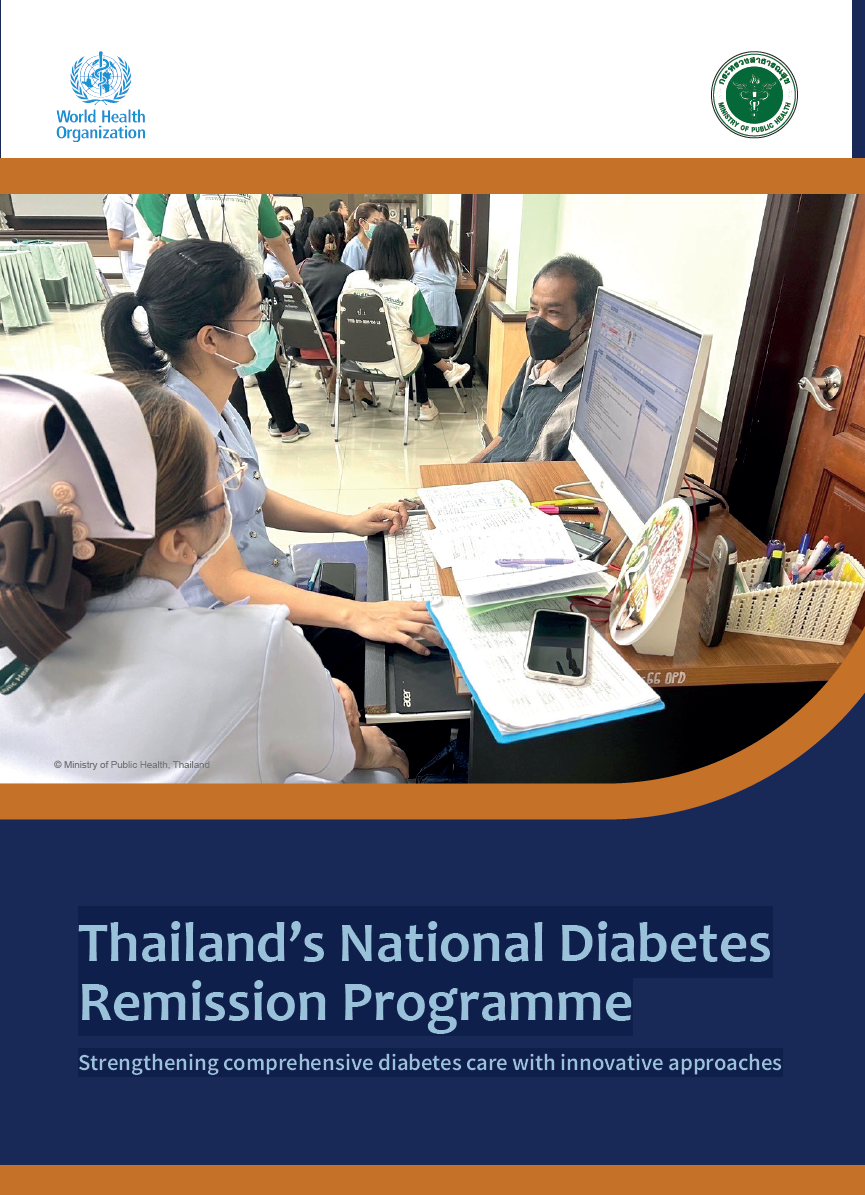
Thailand’s National Diabetes Remission Programme. Strengthening comprehensive diabetes care with innovative approaches (2026 case study)
Case study
26 Feb 2026
We use cookies to enhance your browsing experience, serve personalized ads or content, and analyze our traffic. By clicking "Accept All", you consent to our use of cookies. Read More